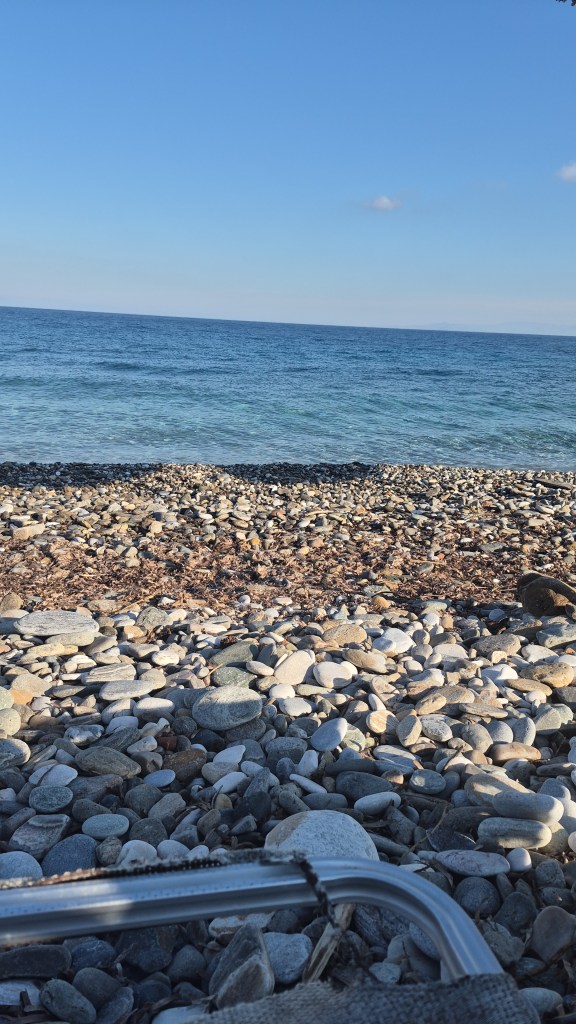
After four weeks at the Archipelagos Institute of Marine Conservation, I’m starting to get more involved in the practical side of marine conservation alongside developing my own research project. This week was particularly exciting, as I took part in my first boat survey since arriving, saw Risso’s dolphins in the wild, and gained experience working with data from a survey and two marine mammal strandings.
It was a busy week, with a mixture of fieldwork, data processing, and time spent working on my project proposal. It was also a reminder that marine conservation involves much more than simply observing wildlife; there is plenty of work behind the scenes that helps researchers understand and protect the marine environment.
Monday: Sea Turtle Survey and Project Proposal
Monday began with a sea turtle survey, where I was involved as shore support. This gave me another opportunity to take part in fieldwork and see how surveys fit into the wider work of marine conservation.
After the survey, I spent time working on my project proposal. With my literature review now approved, I’m focusing on developing my research project and making steady progress with the different sections.
It was a good way to start the week, balancing practical conservation work with the academic side of my placement.
In the evening, I went out for dinner, giving me some time to relax after a productive day.
Tuesday: Land Survey and More Research
On Tuesday, I took part in a land survey before returning to work on my project proposal.
Although my research focuses on the behaviour of short-beaked common dolphins, being involved in different survey activities gives me a broader insight into the variety of work taking place at Archipelagos.
I continued making progress with my proposal throughout the day, before having a relaxed evening and getting ready for the next day’s activities.
Wednesday: My First Boat Survey and an Amazing Dolphin Sighting!
Wednesday was definitely one of the highlights of my placement so far because I took part in my first boat survey since arriving at Archipelagos.
Being out on the water was a very different experience from the studying and writing I had been doing over the previous few weeks. It was exciting to experience a survey in a marine environment and see how the work takes place outside the base.
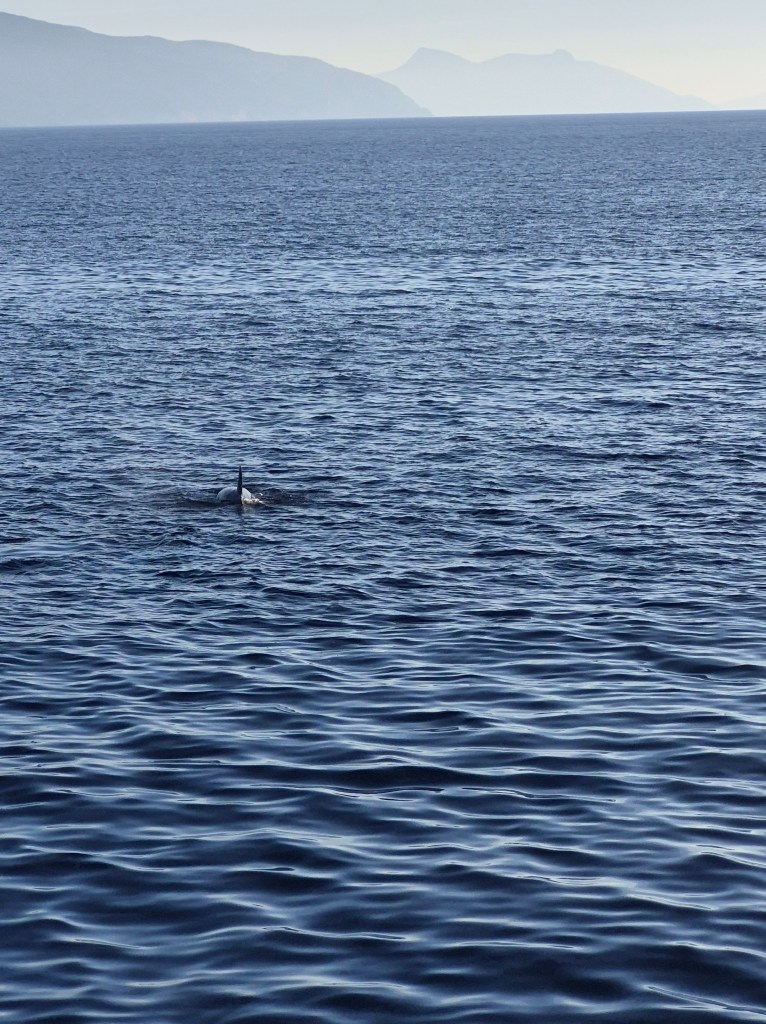
The highlight of the day was seeing Risso’s dolphins!
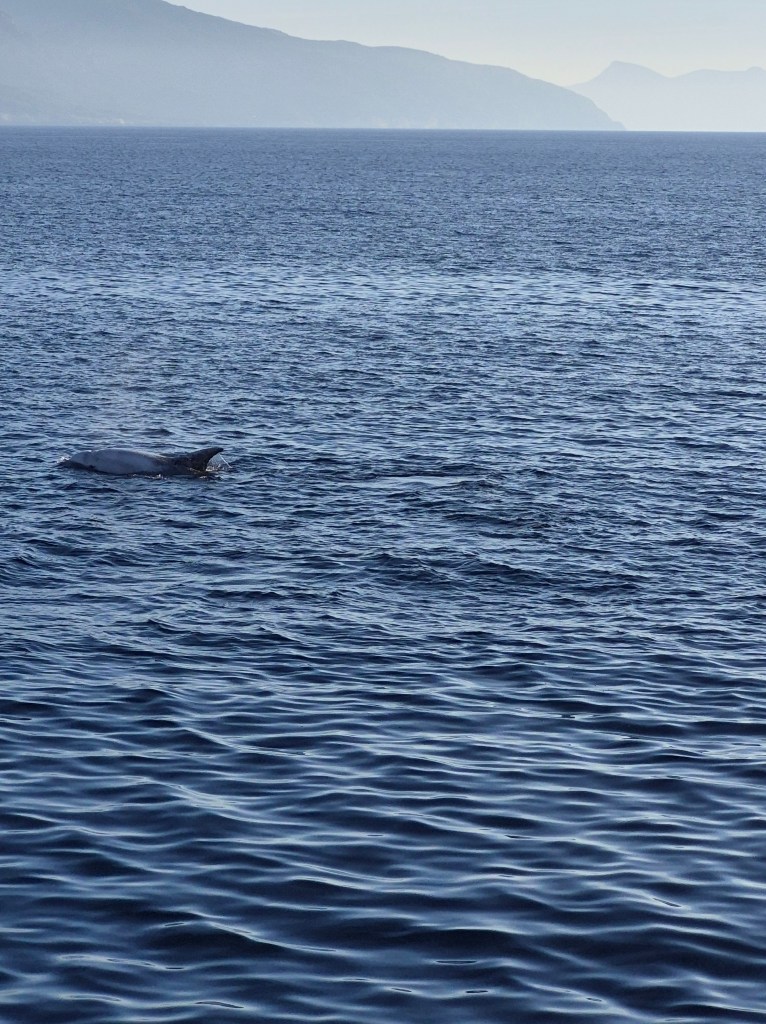
Seeing dolphins in the wild was an incredible experience, and it was amazing to encounter a species I had been learning about as part of my placement. Experiences like this make the science feel much more tangible and remind me why studying and protecting marine mammals is so important.
Although I am still at the beginning of my placement, getting the opportunity to take part in a boat survey and see marine mammals in their natural environment was a memorable step forward.
It was a day that reminded me how much there is to learn about the marine environment and how exciting fieldwork can be.
Thursday: A Full Day of Data Processing
After the boat survey on Wednesday, Thursday was spent processing the data collected during the survey.
This took the whole day, which gave me a better appreciation of how much work can be involved after fieldwork has finished.
When we think about marine research, it is easy to focus on the exciting moments out on the water and the animals being observed. However, the data collected during surveys also needs to be processed and organised so that it can be used in research.
This behind-the-scenes work is an important part of understanding what researchers observe and ensuring that the information collected can contribute to scientific knowledge.
Spending the day processing the survey data helped me see another side of marine research, where attention to detail and careful handling of information are essential.
Friday: Finishing My Introduction and Attending Two Strandings
Friday was another busy day, as I continued working on my project proposal and finished writing the introduction.
It felt good to complete another section of the proposal and continue moving my research project forward. After spending the previous weeks working on my literature review, I am now gradually building the next stage of my project.
Later in the day, I attended two marine mammal stranding events. Unfortunately, both animals had already died, which was sad to see.
Despite this, the experience was a valuable learning opportunity. I had the chance to help measure the animals and take part in collecting data.
Stranding investigations can provide important information about marine mammals, including details that may help researchers understand individual animals and investigate possible causes of death, depending on the condition of the animal and the work that can be carried out.
Being involved in the measurements and data collection gave me a better understanding of the practical work involved in responding to strandings. It was also a reminder that marine conservation is not always about seeing healthy animals in the wild; sometimes it involves gathering information from difficult situations to help improve our understanding of marine life.
After such a busy week, we went out in the evening to celebrate and spend some time together.
Saturday: A Day Out in Vathi
After a full week of surveys and research, Saturday was a chance to get out and explore.
We went to Vathi, where we spent the day snorkelling, shopping, and going out for some food. It was lovely to have a day away from the usual routine and enjoy some time with everyone.
Snorkelling was a particularly nice way to spend time in the marine environment after a week focused on research and fieldwork. It was also a reminder that there are plenty of ways to appreciate the sea beyond scientific work.
It was a lovely day out and a welcome opportunity to relax after a busy week.
Sunday: Time to Recharge
Sunday was a much quieter day. I stayed in, worked on this blog, and spent some time getting organised for the week ahead.
After several days of fieldwork, data processing, and working on my project proposal, it was nice to have a slower day to recharge.
Writing these weekly updates has also given me a chance to reflect on what I have been learning and how my experience at Archipelagos is developing. Looking back at each week makes it easier to appreciate how many different experiences can fit into a relatively short period of time.
Five Weeks Down: From Research to Real-World Experience
Looking back, week five has been one of the most memorable weeks of my placement so far.
Taking part in my first boat survey and seeing Risso’s dolphins was a real highlight. I also gained experience processing survey data and helping with measurements and data collection during two marine mammal stranding events.
These experiences have shown me different aspects of marine conservation, from observing animals in the wild to carrying out the detailed work needed to turn observations into useful scientific information.
Alongside the fieldwork, I also finished the introduction to my project proposal, bringing me another step closer to developing my own research project.
The week included some difficult moments, particularly attending the two strandings, but these were valuable learning experiences too. They reminded me that conservation work can be rewarding, challenging, and sometimes emotional, all at the same time.
With five weeks of my eight-month placement now behind me, I am beginning to gain a broader understanding of what marine conservation work involves, both in the field and behind the scenes.
I’m looking forward to building on these experiences, continuing to develop my research, and discovering what the next week at Archipelagos will bring.
Five weeks down, and plenty more to discover beneath the surface!

